Start here
Kotor Blue Cave tour: worth it?
Is the Kotor Blue Cave boat tour worth it? What you see on the bay, what the swim is, what the sea can stop and who should pick another trip.
Choose your boat date ↗Quick answer
Yes, for visitors who want the Bay of Kotor from the water and a swim in a glowing sea cave. The tour takes about three hours by speedboat from Kotor, with a church islet, a former submarine tunnel and a fort on the way. It is not a promise of calm water: the sea decides the route on rough days, and swimming is only for confident swimmers.
The short answer
The tour earns its place if you like boats, can swim and want a lot of the Bay of Kotor in one outing. It covers the baroque waterfront of Perast, a stop on a man-made church island, a Yugoslav-era submarine tunnel, a pass by an island fort and a swim at the Blue Cave. It is a fast, scenic, slightly splashy trip, not a gentle cruise, and it depends on the sea.
- Book it to swim at the Blue Cave and see the church islet
- Choose a shorter trip if you only want Perast and the islet
- Skip it if you are prone to seasickness or cannot swim
What the tour is
The ticket is for a speedboat tour of about three hours that starts in Kotor. A licensed skipper and a licensed local guide run it, and the guide speaks English, telling stories about the places you pass. An audio guide covers French, Spanish, German, Russian, Hebrew, Italian, English and Portuguese, but it needs a phone with an internet connection. Private boats and small groups of up to ten people exist, as does a standard group of up to thirty, and two starting points are offered depending on the option you choose.
The bay you cross
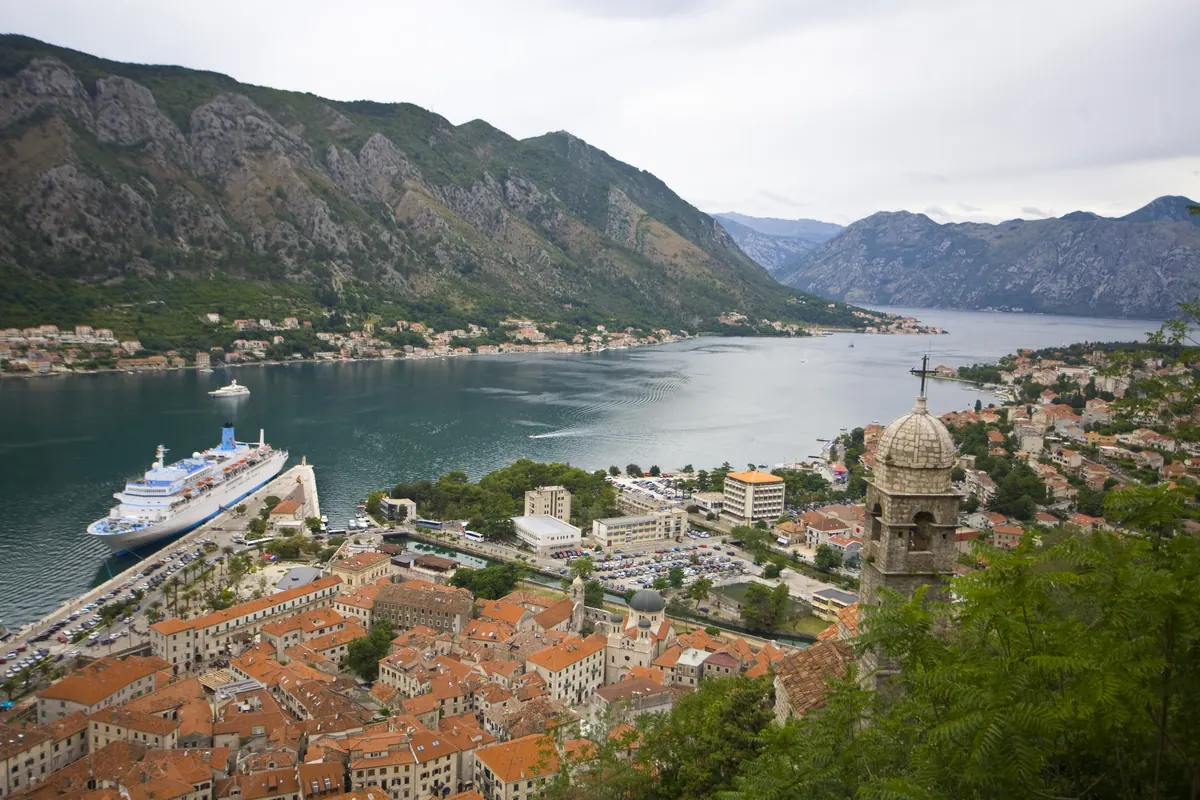
Wikipedia describes the Bay of Kotor as a winding inlet of the Adriatic in southwestern Montenegro, about 28 kilometres long and ringed by high mountains. The narrow Verige Strait divides the inner bay from the outer reaches, and its narrowest point is only about 340 metres wide. The tour moves along both parts, which is why the scenery changes so much, from closed-in water below the mountains to a wider view at the bay's mouth.
Read next: The Bay of Kotor and UNESCO
Perast and the church islet
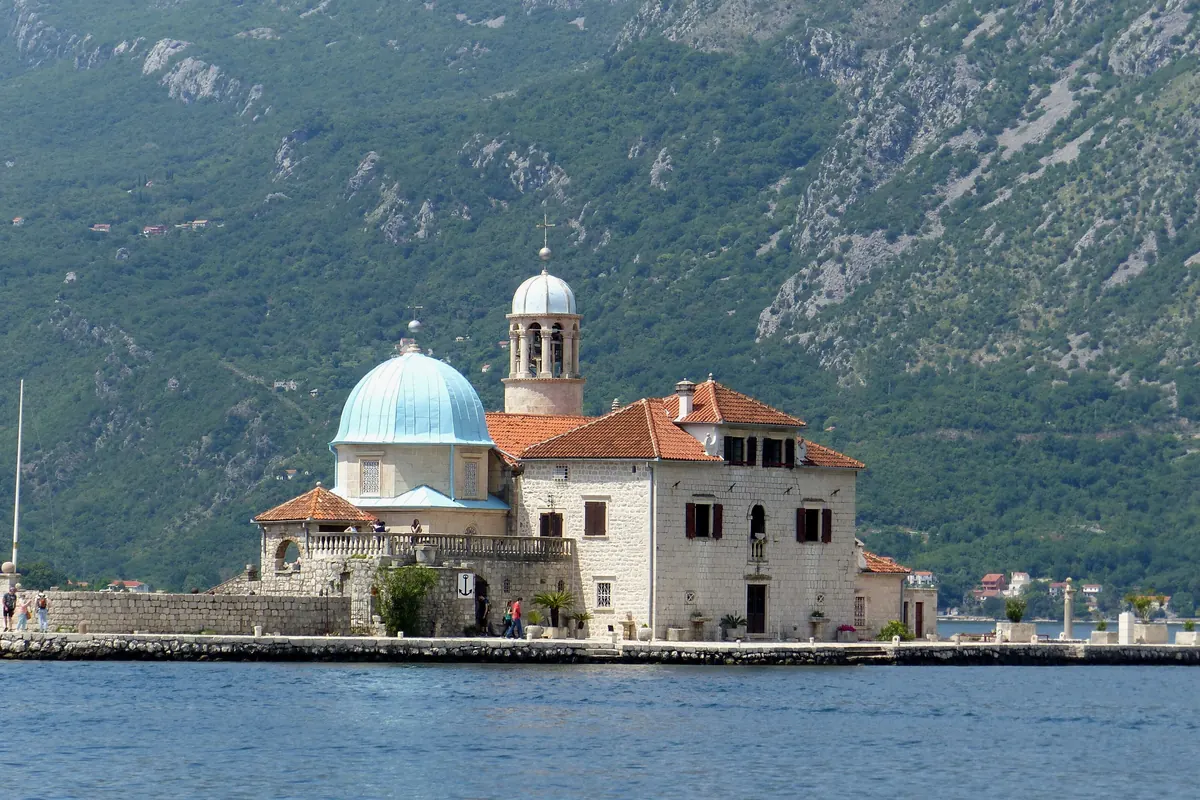
The boat passes Perast, which Wikipedia calls a town noted for its closeness to two islets, St George and Our Lady of the Rocks. The second is an artificial island, made over generations from rocks and sunken ships, with a church and a museum on it. The tour stops there for about twenty minutes. You can stay on the boat, or step ashore and go in, as long as you are not in swimwear. The museum beside the church is the reason some visitors choose to land.
Read next: Our Lady of the Rocks explained
The tunnel and the fort
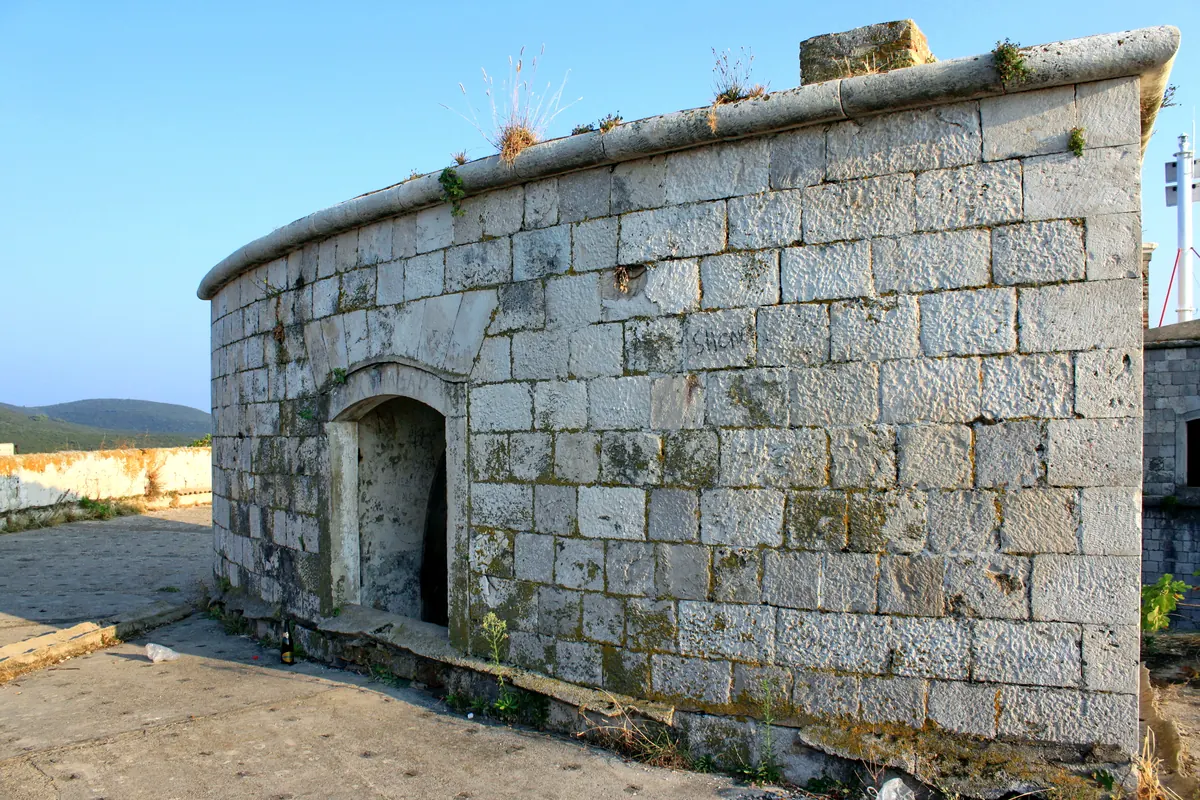
Next comes a former submarine tunnel. Showcaves reports that three tunnels were cut into the rock on the northern coast of the Luštica peninsula and that the Yugoslav Navy built them in the 1970s. A submarine could enter underwater and surface inside. On the tour it is a short stop to look and photograph. The boat then passes Mamula, a small round island almost filled by an Austro-Hungarian fort. The stop at the tunnel is short, about ten minutes, and the fort is a pass-by of a few minutes, so treat both as part of the scenery between the church islet and the cave.
Read next: Submarine tunnels and Mamula
The Blue Cave swim
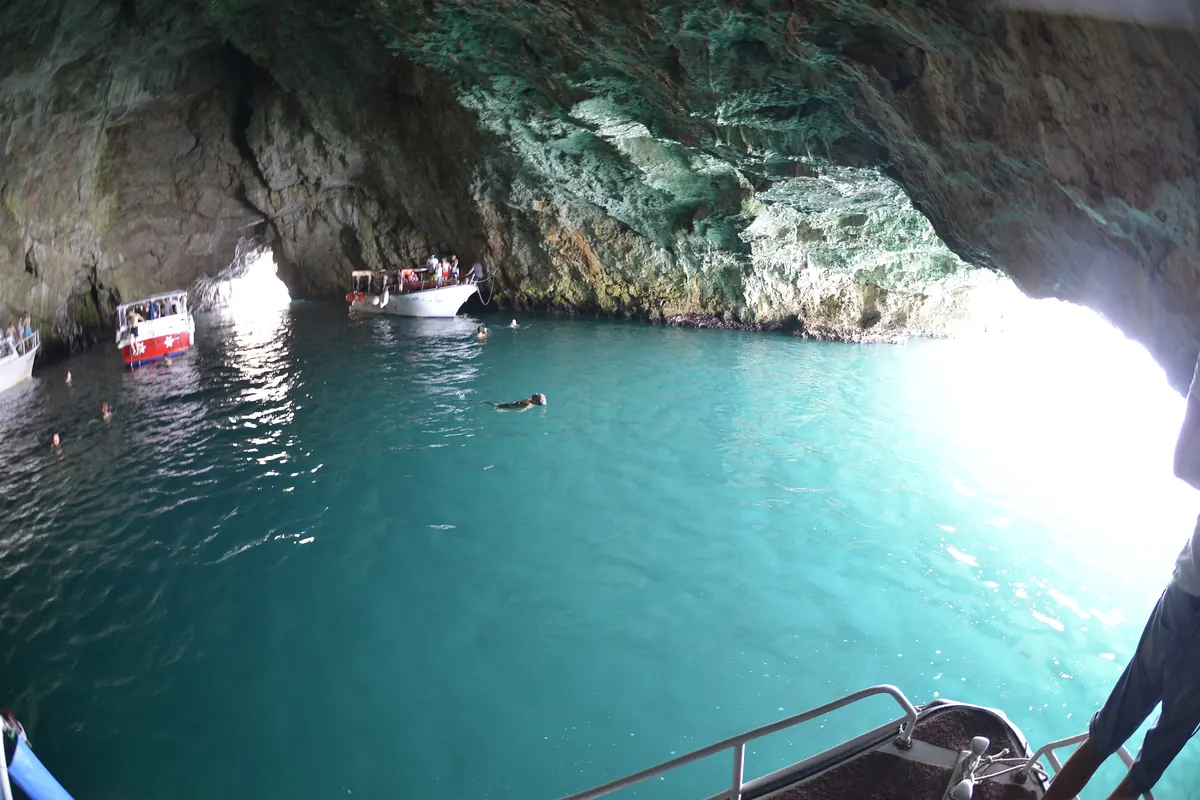
The cave is the main event. Showcaves says it is a single chamber with a few metres of seawater, that it is reached by boat and that the blue light comes from sunlight in the water. On this tour the stop lasts about half an hour and is a swim. Under the current rules boats stay outside, so guests swim in from the entrance with life jackets. Photos from earlier years show boats inside the cave, which is no longer the plan. Showcaves adds that the cave has two entrances, with the rear one slightly smaller, and several smaller caves nearby that boats cannot enter.
Will you actually see the cave?
Usually, but not on every day. Showcaves says the cave is reached only by boat, that strong waves can stop boats entering. In high season it says the cave is crowded, boats may wait outside and, with too many boats, swimming is not possible. Most boats allow about 15 minutes of swimming at the cave, so a stop of about half an hour is generous by that standard.
Light and time of day
The blue comes from sunlight, so the hour matters. Showcaves says the blue light is a result of sunlight in the water, that a visit on a rainy day makes little sense and that boats run when there is enough sun, because there is not enough sunlight at other times. The booking calendar shows the departures for your date, so favour a middle-of-the-day slot over an early or late one if the cave is the reason you are going.
Doing it yourself instead
Showcaves notes that the cave itself is free and that visitors with their own boat or a kayak can go independently. The tour fee pays for the boat, the skipper, the guide and the other stops, which would be hard to reach otherwise: the church islet, the tunnel and the fort. If swimming at the cave is your only goal, a small-boat or kayak trip is an option, though it asks for more effort and more attention to the sea. Check the rules for boats at the cave before you plan anything, because they have changed.
Kotor before or after
The tour starts in Kotor, and the old town deserves time of its own. Wikipedia describes a medieval cityscape inside walls, with the Cathedral of Saint Tryphon, built in 1166, among its notable buildings. The fortifications climb the mountain of St John, more than 260 metres above sea level. Leave a slack hour on either side of the boat, whether for a walk through the old streets or a rest after the swim.
What the sea can change
A speedboat trip to the mouth of a bay depends on the water. If the waves on the open sea are too high, the operator changes the route or offers another tour, and the cave is the stop most likely to go. Wikipedia says a strong, cold wind called the Bora blows in winter and a warm, humid wind called the jugo brings heavy rain, mostly in autumn and spring. Leave some slack in your day, because no stop is guaranteed.
Who it suits
It suits confident swimmers, curious sightseers and families with older children who are comfortable in the water. It also suits visitors who like a little history with their swim: a church islet with a legend, a tunnel from the Cold War and a fort with a darker past. A trip that is half sightseeing and half swimming is not for everyone, so decide whether the swim stop is what you are paying for, and whether a calmer, shorter boat trip would suit your party better. Families should check the group options carefully.
What to wear and bring
Wear swimwear under comfortable clothes, and carry a cover-up, because swimwear is not allowed in the church on the islet and shoulders and knees need to be covered there. Bring a towel, sunscreen, a sun hat, comfortable shoes and some cash for the optional church entry. Large bags and oversize luggage are not allowed on board, so travel light and keep valuables to a minimum. The practical guide to what to wear and bring has the full list.
Read next: What to wear and bring
Who this isn't for
The tour is not for everyone, and the operator lists several groups who should not book it. The boat is a fast, small speedboat, and the main stop is a swim in open water, so the list below is worth reading closely before you pay. If any of these describes you or someone in your party, choose a calmer trip, or spend the day on land in Kotor.
- People prone to seasickness, since the boat is fast and small
- Anyone who cannot swim or does not like deep water
- Pregnant women, people with back problems and people over 118 kilograms
- Wheelchair users, because the boats are not accessible
Booking and independence
Open the booking calendar, pick a day, and then choose the option that fits your group and the starting point you prefer. The booking page shows the departures and places open for your date and the price in your own currency. This site is independent: it does not run the boats, own the islet or run its museum, and it has no affiliation with any of them. Tours are booked with GetYourGuide, whose page opens when you press a booking button.
Frequently asked questions
Is the Kotor Blue Cave boat tour worth it?
Yes, for visitors who want the bay from the water and a swim in a glowing sea cave. It runs about three hours by speedboat. It suits swimmers best, and it is a poor fit for anyone prone to seasickness.
How long is the tour?
About three hours, counting the sailing and the stops. The church islet stop lasts about twenty minutes and the cave stop about half an hour. Your confirmation shows the departure time.
Do you swim at the Blue Cave?
Yes, the stop is built around a swim, with life jackets on board. Guests who are not proficient swimmers are not allowed into the water. Rough water can change the plan.
Does the boat enter the cave?
Under the current rules boats stay outside the cave and guests swim in from the entrance. Older photos online show boats inside. The skipper decides how close to go on the day.
What if the sea is rough?
The operator changes the route or offers an alternative tour. The cave is the stop most likely to be affected, so keep your plans flexible.
Is the church on the islet included?
The stop is part of the trip, but entry to the church and museum is an optional extra paid in cash. Swimwear is not allowed inside, so bring a cover-up.
Sources